

Celebrating Bridgerton Season 4: What Did Gilded Age Women Know About Sex?
Polite society, impolite questions.

As the long-awaited Bridgerton Season 4 returned to our screens last month, I’m marking the moment with a selection of Regency-inspired content across our channels. This week, we’re focusing on all things female desire.
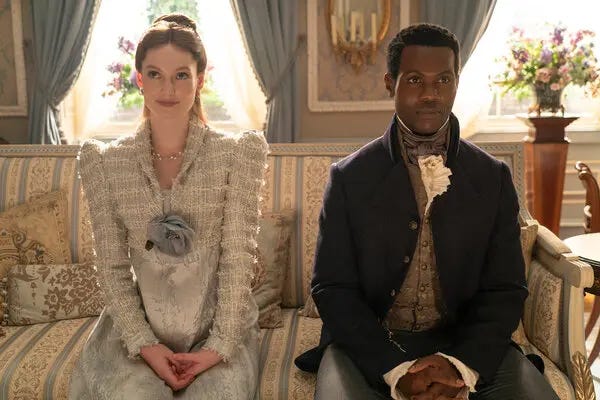
Aside from captivating audiences once more with gorgeous gowns and scandalous storylines, this season lingers on whispered conversations between women uncertain of what they should be feeling in the marital bed, heroines negotiating desire in a world which polices (and romanticises) female innocence, and the importance of experiencing ‘the pinnacle’: a Regency-coded euphemism for *ahem* climax.
Unsurprisingly for any hardcore fans, the show handles its subject matter with its usual charm and humour. But it did get me thinking: if the fictional women of Regency England were given so little education about the nature of their bodies, what of the real-life ladies of the Gilded Age?

The ‘Pinnacle’ and the Long History of Female Pleasure
Long before the Gilded Age, Western medical theory held that female pleasure mattered for conception. Classical authorities such as Aristotle and Galen advanced what historians often call the ‘two-seed’ model, in which both men and women were thought to produce generative seed. In some interpretations of this theory, female climax was considered part of successful reproduction.
Versions of these ideas circulated well into the early modern period. However, by the nineteenth century, medical thinking was shifting. Advances in anatomical study, alongside changing moral attitudes, increasingly separated female pleasure from reproductive necessity.
By the late Victorian era, mainstream British and American medical opinion did not require female orgasm for conception. Instead, a new cultural ideal emerged: the respectable woman as naturally modest, passionless, and even incapable of orgasm. According to the historian Nancy F. Cott, middle-class ideology in the nineteenth century increasingly framed women as morally superior and sexually restrained.
Yet this created a profound contradiction. While earlier traditions had acknowledged female physical response, Victorian morality often preferred not to speak of it at all. Passion, it seemed, was the remit of the men…

The (Mis)education of an Heiress
For elite daughters in Britain and the United States during the Gilded Age, education was extensive but selective.
Girls were trained in music, languages, literature, drawing, and deportment. They learned how to host, converse, and represent their families in society, with many packed off to fancy finishing schools in London, Paris, and New York to have their manners and accents polished to perfection.
What they did not usually receive was structured anatomical instruction.
Many mothers, themselves raised in cultures of restraint, offered only euphemistic explanations of marital duty; advice manuals emphasised modesty and obedience rather than pleasure. In 1857, William Acton wrote in The Functions and Disorders of the Reproductive Organs that ‘the majority of women… are not very much troubled with sexual feeling’. His claim, though debated even in its own time, was incredibly influential, becoming emblematic of Victorian assumptions about female desire.
“As a general rule, a modest woman seldom desires any gratification for herself. She submits to her husband’s embraces, but principally to gratify him; and were it not for the desire of maternity, would far rather be relieve of his attentions.”
— William Acton, 1875.
