



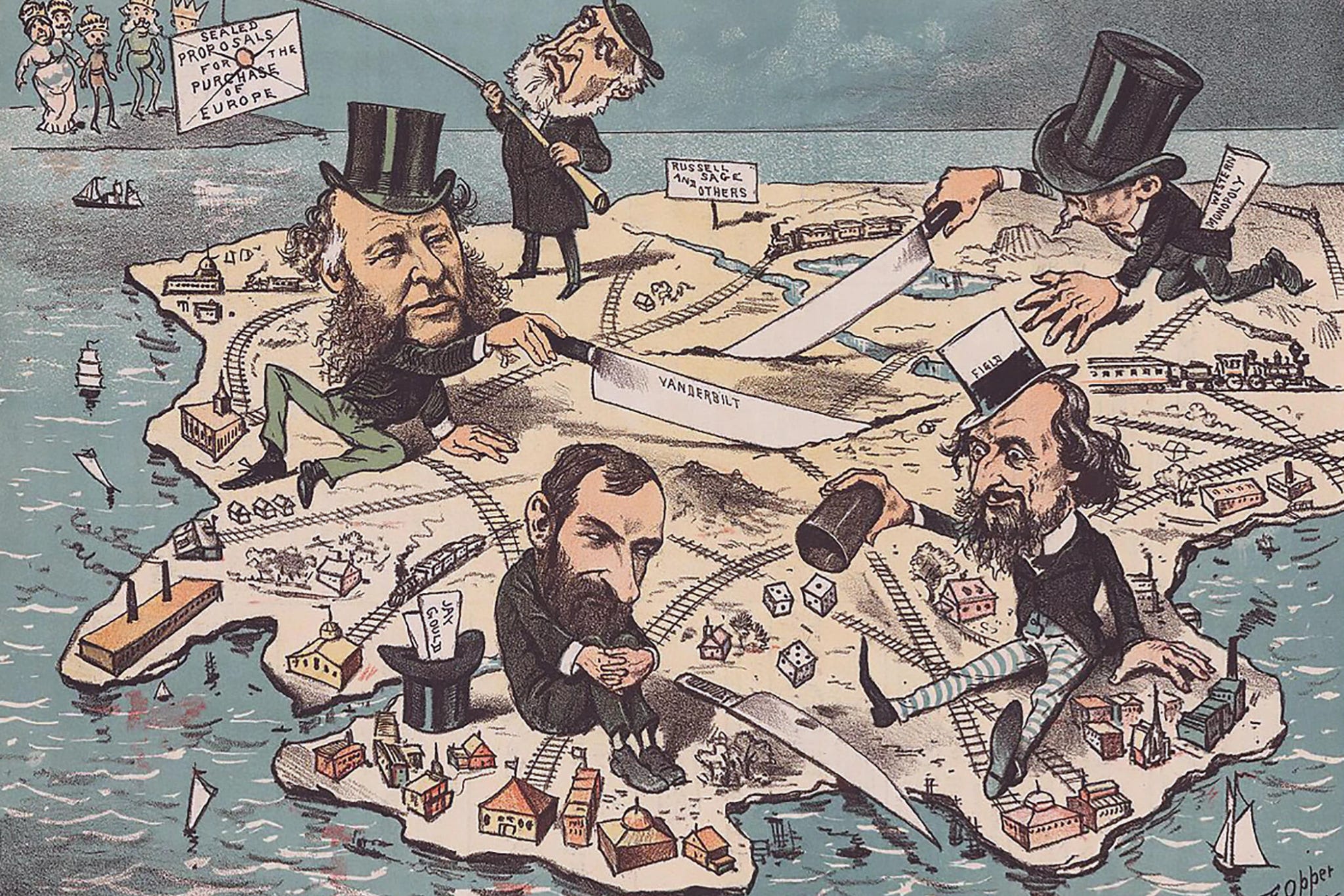
Long before the daughters of America’s Gilded Age were crossing the Atlantic armed with enough cash to rescue half the crumbling country houses of Britain, somebody had to make the money – and not always inherited money, either.
Not the kind that arrived neatly packaged in old ledgers, under respectable surnames. No, the fortunes that built the Gilded Age were often newer, louder, and infinitely more controversial than that. They came from railway lines, oil wells, steel mills, department stores, and banking houses where fortunes could rise, collapse, or double before luncheon.
In many cases, these fortunes appeared so quickly that old-money families scarcely knew what to make of them. One moment, a man was the son of a ferryman, a dry goods clerk, or an immigrant shopkeeper. Next, he was building marble mansions on Fifth Avenue and marrying his daughters to European dukes.
But of course, making money and being accepted by society were never quite the same thing. And nowhere was that truth more painfully obvious than in Gilded Age America.

The Commodore: From Ferry Boats to Fortune

Few stories capture the spirit of American self-invention quite like that of Cornelius Vanderbilt, the man who would become known simply as The Commodore.
Born in 1794 on Staten Island to a modest Dutch-American farming and ferrying family, Vanderbilt left school at eleven and, according to family accounts preserved in early biographies, borrowed one hundred dollars from his mother to purchase his first small sailing vessel. It was hardly the sort of beginning that suggested European titles, private railway cars, or mansions in its future, but Vanderbilt possessed something that old New York often distrusted almost as much as it admired: ruthless clarity.
