

Gilded Age Deep Dive: William Kissam Vanderbilt
Behind every great man is a greater woman…

In the Gilded Age, wealth could buy almost anything. Lasting prominence, however, required more than money. It demanded visibility, assertion, and an appetite for spectacle.
Born into one of America’s most formidable dynasties, William Kissam Vanderbilt inherited fortune, status, and security on a scale few could rival. He lived an unquestionably successful life by the standards of his class. Yet history has been far more generous to his first wife, Alva Belmont, whose ambition and public presence ensured her enduring place in the Gilded Age story.
This is not a tale of failure or decline. It is the story of a man whose model of power became quietly obsolete.

Born into an Empire
William Kissam Vanderbilt was born on the 12th of December 1849, the grandson of Cornelius Vanderbilt and the son of William Henry Vanderbilt. By the time William reached adulthood, the Vanderbilt fortune was no longer a precarious achievement but a firmly entrenched institution. Railroads, shipping interests, and vast investments ensured financial security that would last generations.
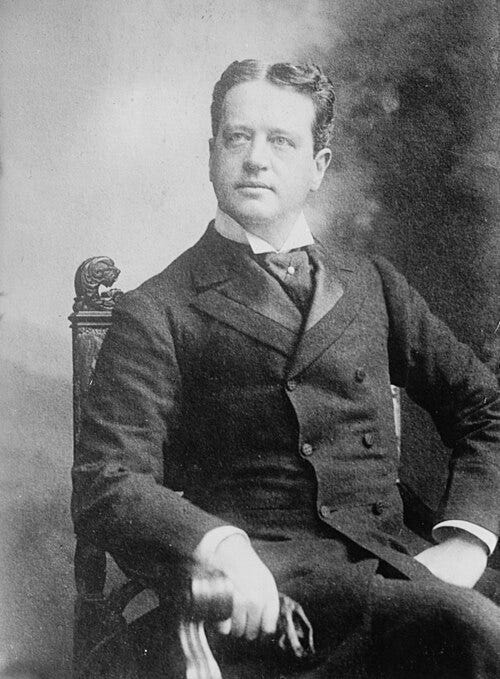
Unlike his grandfather, William did not need to build an empire. His role was custodial. He belonged to the second generation of industrial heirs, men expected to preserve wealth, manage assets, and avoid scandal. Contemporary accounts describe him as reserved and private, traits well-suited to stewardship, if less effective in a society increasingly drawn to display.
For much of his early life, his inheritance alone guaranteed his relevance.

Wealth in a Changing World
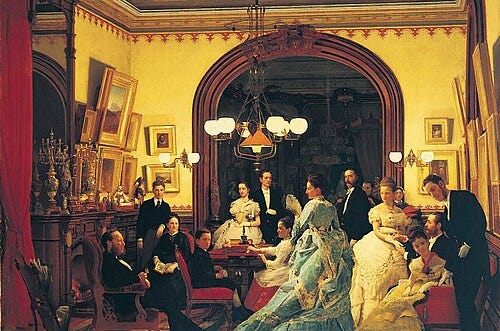
By the 1870s, New York high society was shifting rapidly. New fortunes were rising, competition for recognition intensified, and social authority increasingly depended on public assertion rather than pedigree alone. Architecture, entertainment, and cultural patronage became tools of dominance.
William was well-positioned financially but temperamentally unsuited to this new mode of social competition. He preferred discretion to confrontation and stability to rivalry, instincts that ensured security, but offered little distinction in a crowded social landscape increasingly driven by the need to be ‘seen’. The tension between inherited authority and performative power was one William would deal with for most of his life.

Courtship and Calculation
William’s courtship of Alva Smith (1853-1933) unfolded within the tightly choreographed world of elite 1870s society, where marriage was as much about alignment as affection.
Introduced to William by her close friend, Consuelo Yznaga, at a Vanderbilt party, Alva had already distinguished herself as intelligent, striking, and acutely socially ambitious. William, meanwhile, brought one of the most powerful surnames in America and the immense fortune that accompanied it.
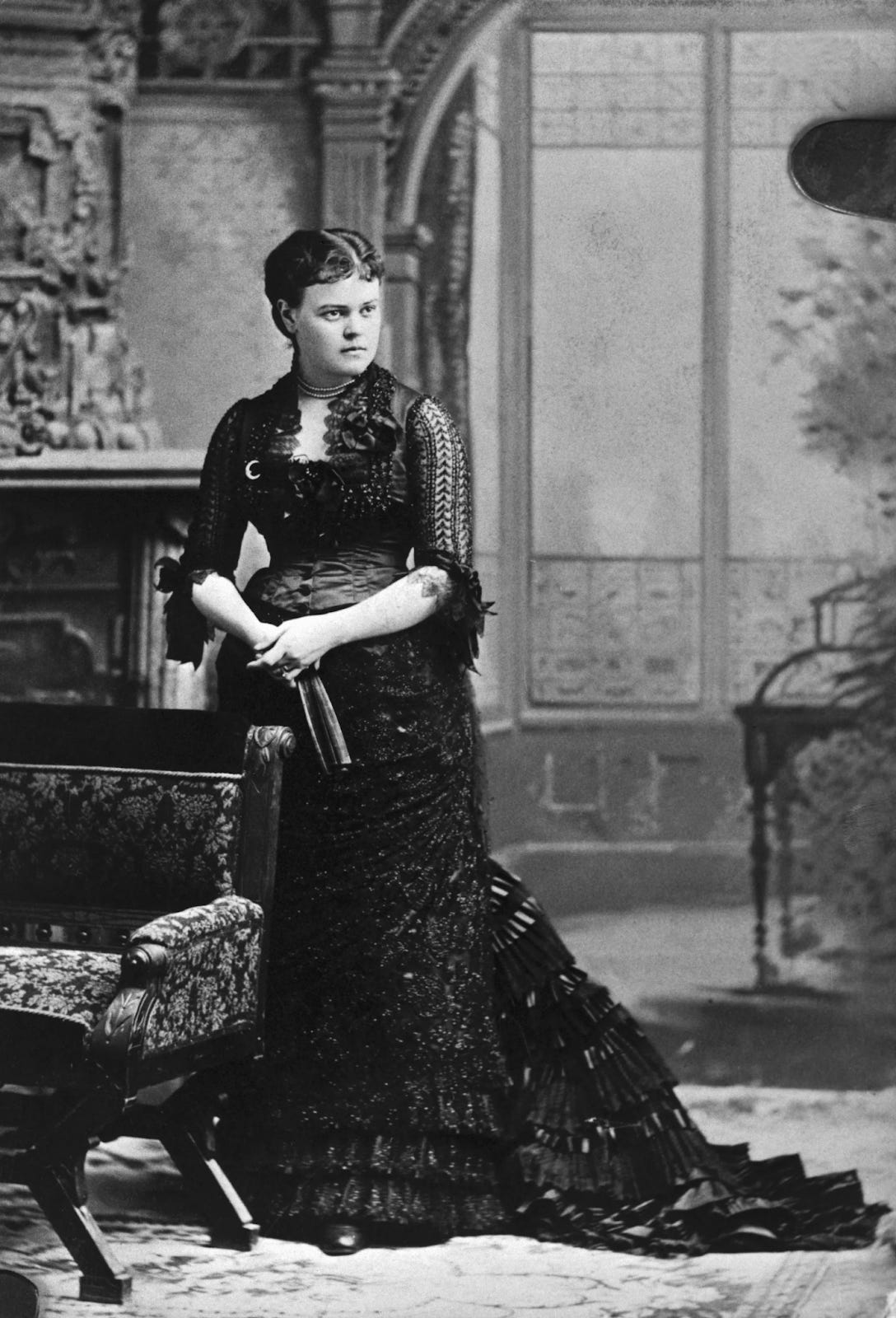
Their relationship developed at a moment when both stood to gain. For William, marriage offered stability and a partner who could navigate the increasingly competitive terrain of New York society. For Alva, the match represented access to extraordinary wealth and, crucially, a platform from which she could assert influence. Contemporary accounts suggest that Alva pursued the marriage with determination, fully aware of what the Vanderbilt name could offer her, while William appears to have been receptive rather than ardent (ah, true love).
