

The Etiquette of Introductions at Balls
The choreography nobody talks about.


At a Gilded Age ball, nothing was accidental. Not the order of arrival or the placement of the chairs or the angle of a glance across the room…
No, they were all carefully managed rituals. But none carried quite as much social weight as the introduction itself.
To be introduced was to be made visible. To be incorrectly introduced was, in some circles, almost worse than not attending at all. (And it wouldn’t even have been your fault!)
Elite society in London, New York, and Newport was tightly structured around recognition and reputation, which meant that introductions worked as a kind of social passport system:
They determined who could speak to whom, who could dance with whom, and, ultimately, who could move comfortably within the room.
That’s a lot of weight for a few sentences to manage!

The Ball as a Controlled Social Machine
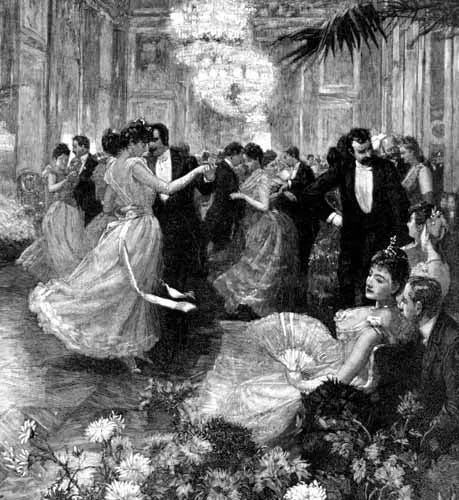
Gilded Age balls were not spontaneous gatherings. They were carefully organised events governed by etiquette, architecture, and hierarchy. If that sounds stuffy, it’s because it was.
The great houses of New York and Newport, such as those built by families like the Vanderbilts, were designed with circulation in mind. Guests moved through defined spaces: arrival halls, receiving rooms, and ballrooms all arranged to control flow and visibility.
Basically, it as crowd control for the very rich.
Social historians of the period note that these spaces were not simply decorative. They looked nice, of course, but they were actually functional systems for managing interaction at scale. The ball itself was a machine for arranging relationships, and not merely for celebrating them.
The etiquette guides preserved in collections show just how prescriptive these environments could be, detailing everything from arrival timing to proper conduct during introductions. Nothing was left to chance, darling.

Who Could Introduce Whom
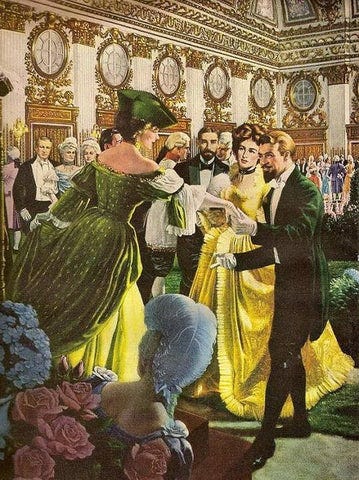
At the centre of the system was a simple but rigid rule: only someone of appropriate standing could introduce others.
And introductions were never casual little gestures. They were endorsements. To introduce two people was to vouch for their social legitimacy within the same sphere. You were, in effect, staking your own good name on it.
Typically:
• A host or hostess controlled introductions within their own home
• Individuals of higher social rank could introduce those below them
• Mutual acquaintances could facilitate introductions, but only with implied consent
So, in practice, social access rested in the hands of a very small number of gatekeepers. A successful introduction could open doors to entire networks. A refused one could quietly close them…and you might never learn which door had shut, or who had shut it.

The Choreography of the Moment
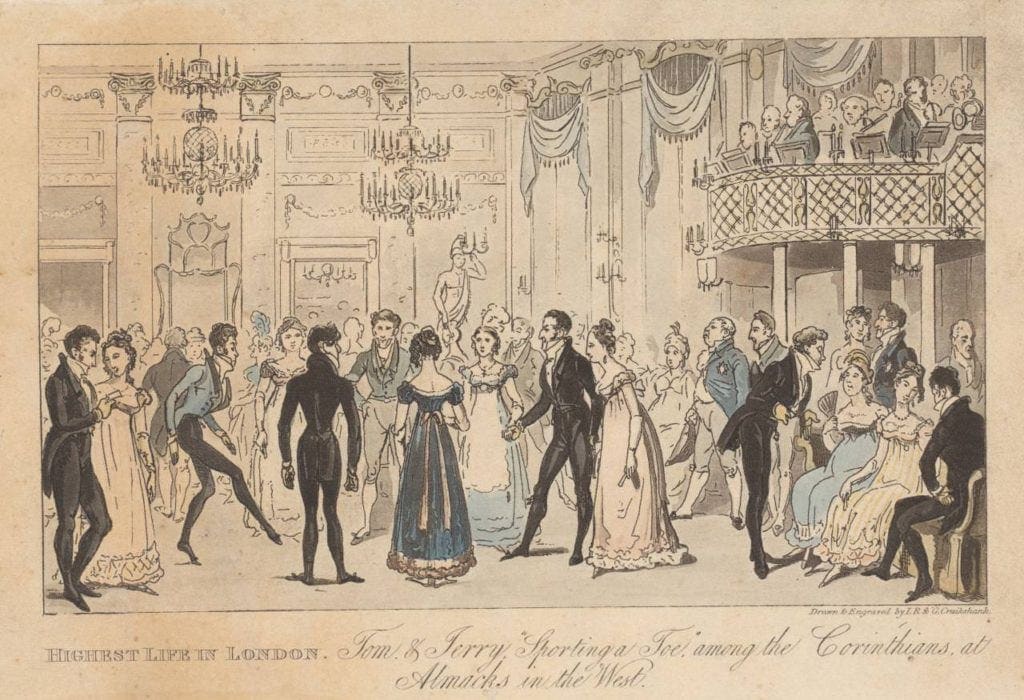
The act of introduction itself was highly formalised. Positively balletic, really.
When introducing two people, nineteenth-century etiquette manuals advised a very specific sequence: the name of the person of lower social standing was presented first, followed by the higher-ranking individual. It was the hierarchy itself, and it was spoken aloud for all to hear.
A typical exchange might unfold like this:
The host approaches two guests, names are clearly stated (often with the barest elaboration), both parties acknowledge each other with a bow or a curtsey, and then a brief remark is exchanged before the whole thing dissolves into conversation or movement.
Blink and you’d miss it. But that was rather the point. Nothing here was meant to linger…its whole purpose was to move you along to the next encounter.
Keep it moving, keep it moving.

The Importance of Being Properly “Presented”
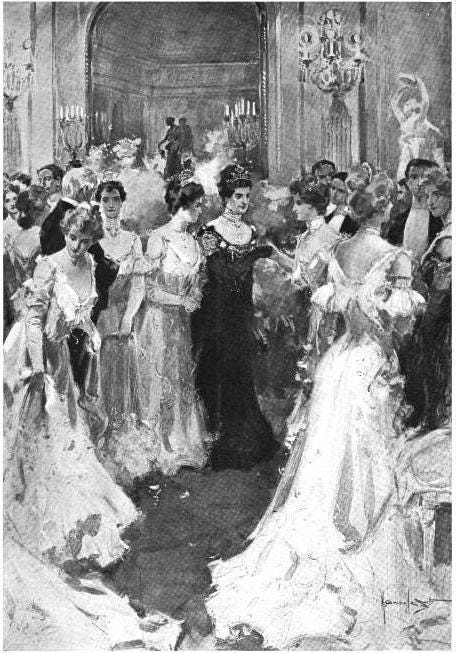
In elite society, there was a world of difference between being introduced informally and being formally presented. One was a handshake. The other was practically a coronation.
