



There is a particular kind of discomfort that arrives when every hour has already been assigned a purpose. In the Gilded Age, this was not unusual. For the elite, life was not simply busy or quiet, but rhythmically structured around seasons of visibility and withdrawal. Entire households moved to a shared calendar that dictated when life was meant to be seen, and when it was expected to fade into the background.
We often think of this world as endlessly social. Balls, dinners, Newport weekends, London Seasons. Yet what sits between these peaks is just as revealing: long stretches when nothing was supposed to happen at all. These pauses were not accidental. They were part of the system.

A Life Built Around Seasons
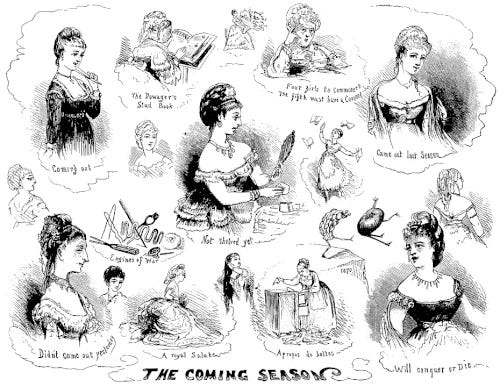
Elite society in the nineteenth century moved to a carefully timed calendar that governed both geography and behaviour.
In London, “the Season” concentrated political, marital and social activity into a defined period when Parliament was sitting, and aristocratic families returned to the capital. Townhouses filled, invitations multiplied, and visibility became almost a form of public duty. In New York, the rhythm was less formally codified but no less powerful, shifting between winter city life and the summer concentration of Newport, where a dense social world briefly intensified before dispersing again.
This was not a casual movement. It was an agreed choreography, reinforced by etiquette, invitation networks and the press. Newspapers reported arrivals and departures with the same seriousness as events themselves, tracking who was “in town” as a marker of relevance. To be absent at the wrong time could mean simply disappearing from the social record for months.

What Happened When the Season Ended
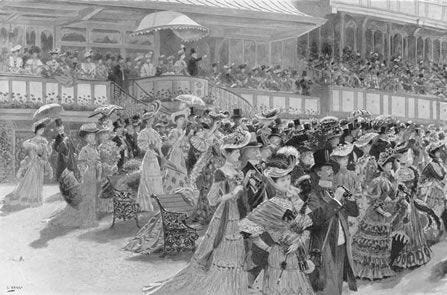
When the social calendar paused, houses did not simply become quieter. They changed function entirely.
City residences were shut or partially closed. Staff numbers were reduced, often dramatically. Drawing rooms that had been the centre of nightly entertaining became spaces of maintenance rather than display. Even correspondence shifted tone, moving from constant coordination to slower, more deliberate exchanges.
