


If you have a moment, please tap the heart button. THANK YOU! It helps others find my work. 💗 To join the conversation, consider upgrading your subscription today.
Today, we are encouraged to believe that love conquers all. In the Gilded Age, it very much did not.
For the elite of Britain and the United States, falling in love was rarely a private indulgence. It was a decision with far-reaching consequences. Romance could jeopardise reputations, destabilise finances, fracture families, and in some cases, derail entire careers. Love, when expressed outside the narrow boundaries of class, marriage, or expectation, became a liability.
This was a period obsessed with appearances, lineage, and control. To love unwisely was not merely embarrassing. It was a dangerous misstep. Below, we explore some of the era’s most scandalous cases of forbidden love.

Alice Keppel: Breaking the Rules Correctly
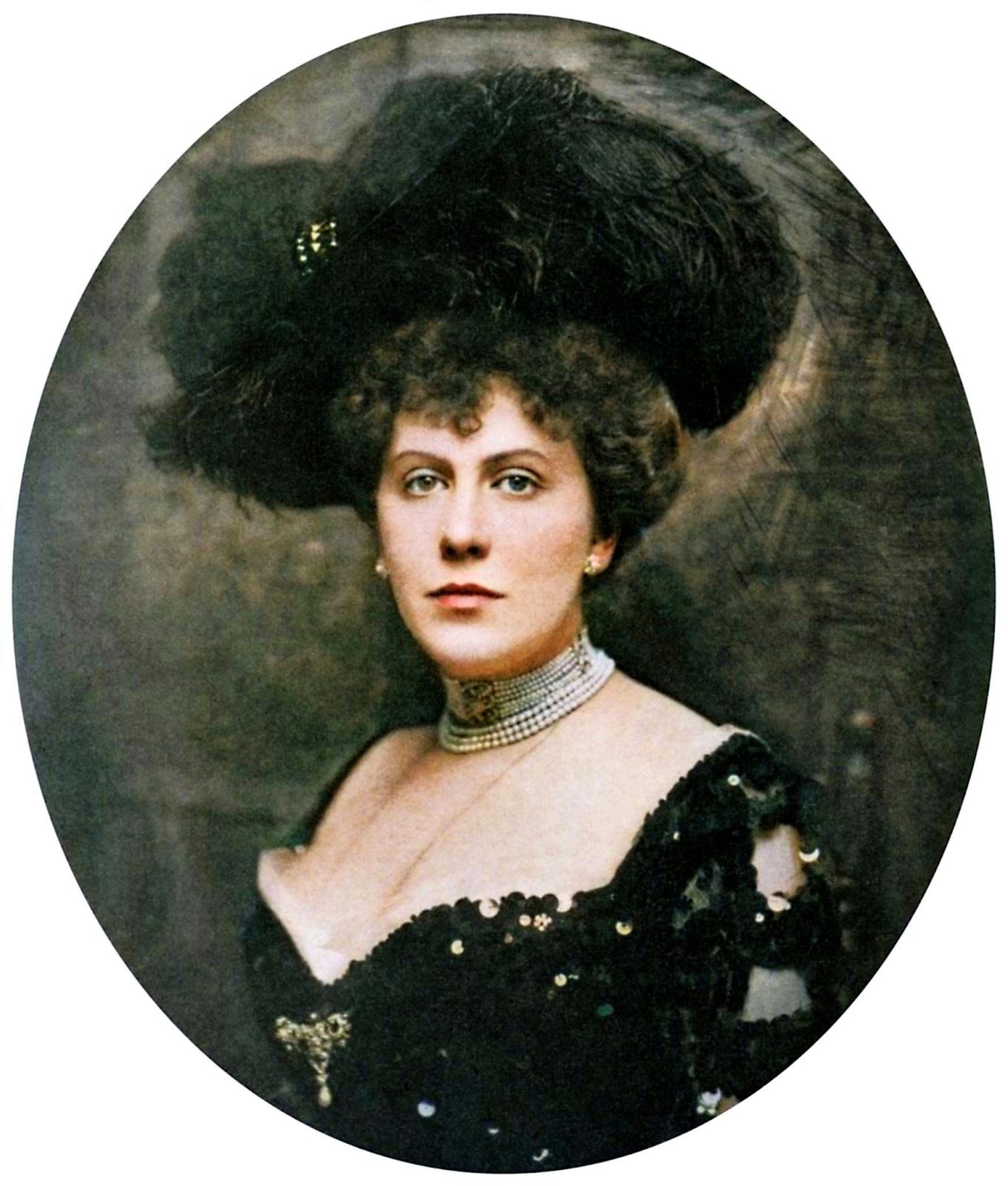
British aristocrat and socialite Alice Keppel (1868–1947) occupied one of the most precarious positions available to a woman in late Victorian Britain: that of an acknowledged royal mistress.
Her twelve-year-long relationship with the Prince of Wales, later Edward VII, began when she was 29 and he 56, and unfolded within a rigid world that ‘officially’ condemned adultery while quietly accommodating it — provided it remained discreet and well managed, of course.
Unlike the two fascinating ladies we’ll look at next, whose relationship was exposed through legal proceedings, or whose love had to be concealed almost entirely, Alice’s affair existed in a narrow, carefully policed middle ground: while widely known within elite circles, it was never publicly acknowledged.
Crucially, Alice did not challenge the priority of the royal marriage, nor did she seek political influence, public recognition, or permanence. Thus, the consequences of her relationship were arguably more contextual than catastrophic. Despite still being romantically entangled with the King up to his death in 1910, Alice was excluded from his funeral and from court life thereafter, a reminder that her position had always been temporary and revocable.
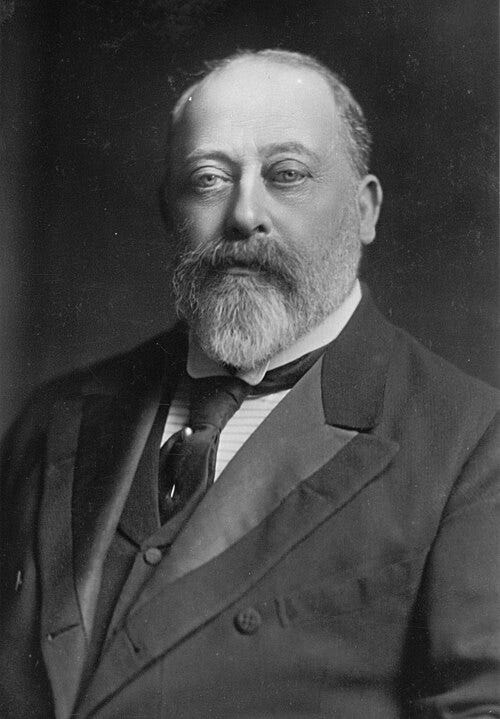
Yet she did not protest, publish letters, or attempt to memorialise the affair. By withdrawing quietly, she preserved her reputation and financial security, remaining socially viable in a way that many women in similar circumstances were not.
As we’ll see, Alice Keppel’s story offers a sharp counterpoint to the other tales we dive into here. Where one love detonated publicly, and another eroded privately, Alice’s survived precisely because it never demanded more than the system was willing to give.
In the Gilded Age, forbidden romance could be endured, but only by those who understood the rules intimately and never pretended they did not exist.
