

The Four-Legged Companions of the Gilded Age
If this is a dog’s life, sign me up.


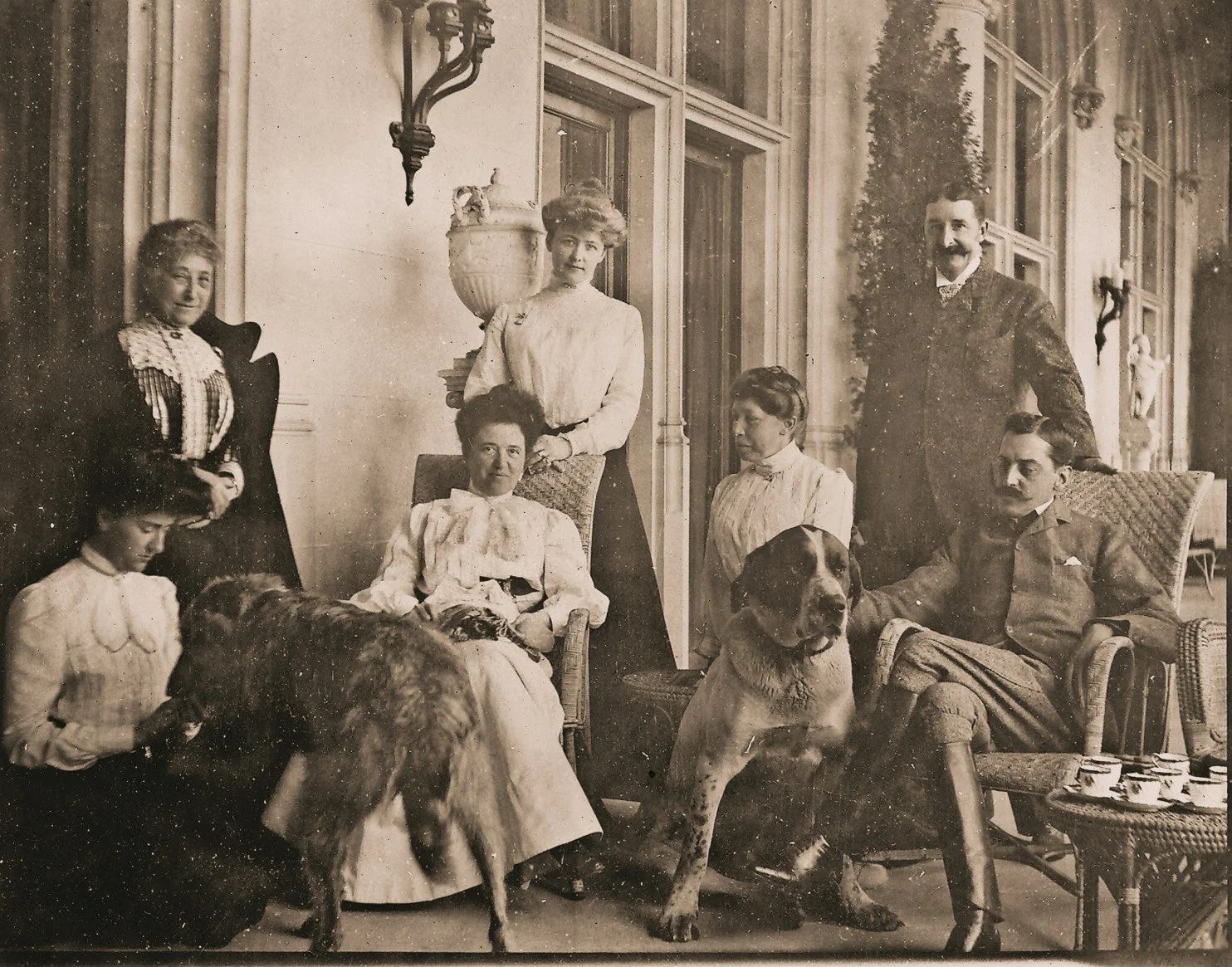
Long before pampered pooches were travelling first class, sporting monogrammed jumpers, and somehow attracting more admirers on Instagram than their owners, the elite of the nineteenth century knew the social power of a well-bred pet.
From drawing rooms to country clubs, handbag-sized dogs trotted faithfully behind heiresses, hunting hounds loped beside shooting parties, and society photographers increasingly found themselves asked to capture not just their wealthy sitters, but their pampered pets as well.
In a world obsessed with pedigree, bloodlines, and proving one’s place in society, perhaps it was only natural that dogs, in particular, became little extensions of the family brand. What’s more surprising is how soft-hearted these furry and feathery companions made some of the most ferocious figures of the age…

Edith Wharton’s Tiny Terriers
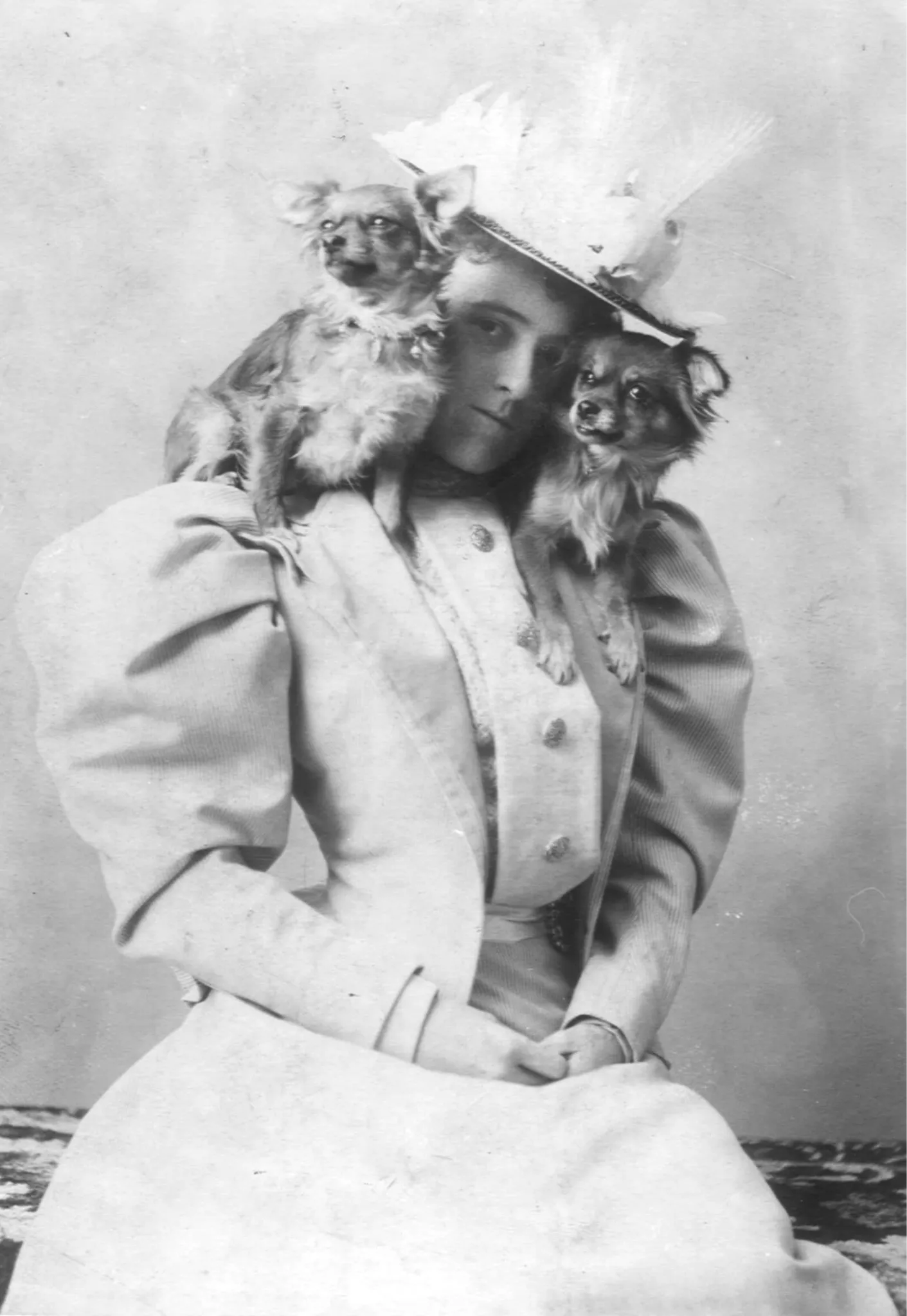
Few figures capture this better than author Edith Wharton, whose sharp observations of upper-class hypocrisy have inspired generations of readers. Wharton may have spent much of her literary career dissecting the social codes of old New York with surgical precision, but away from the page, she reserved some of her greatest tenderness for her dogs.
Photographs from The Mount, the extraordinary Massachusetts estate she designed in 1902, show Wharton in gardens, on terraces, and beside clipped hedges with small terriers at her side, often perched comfortably in her lap or following her through the immaculate grounds. Her letters are dotted with references to her dogs’ routines, ailments, personalities, and occasional mischief, written with a warmth that feels markedly different from the icy social calculations of some of her fictional characters.
Biographer Hermione Lee notes that dogs became especially important to Wharton during difficult periods in her personal life, particularly as her marriage to Edward Robbins Wharton deteriorated, and her literary fame grew.
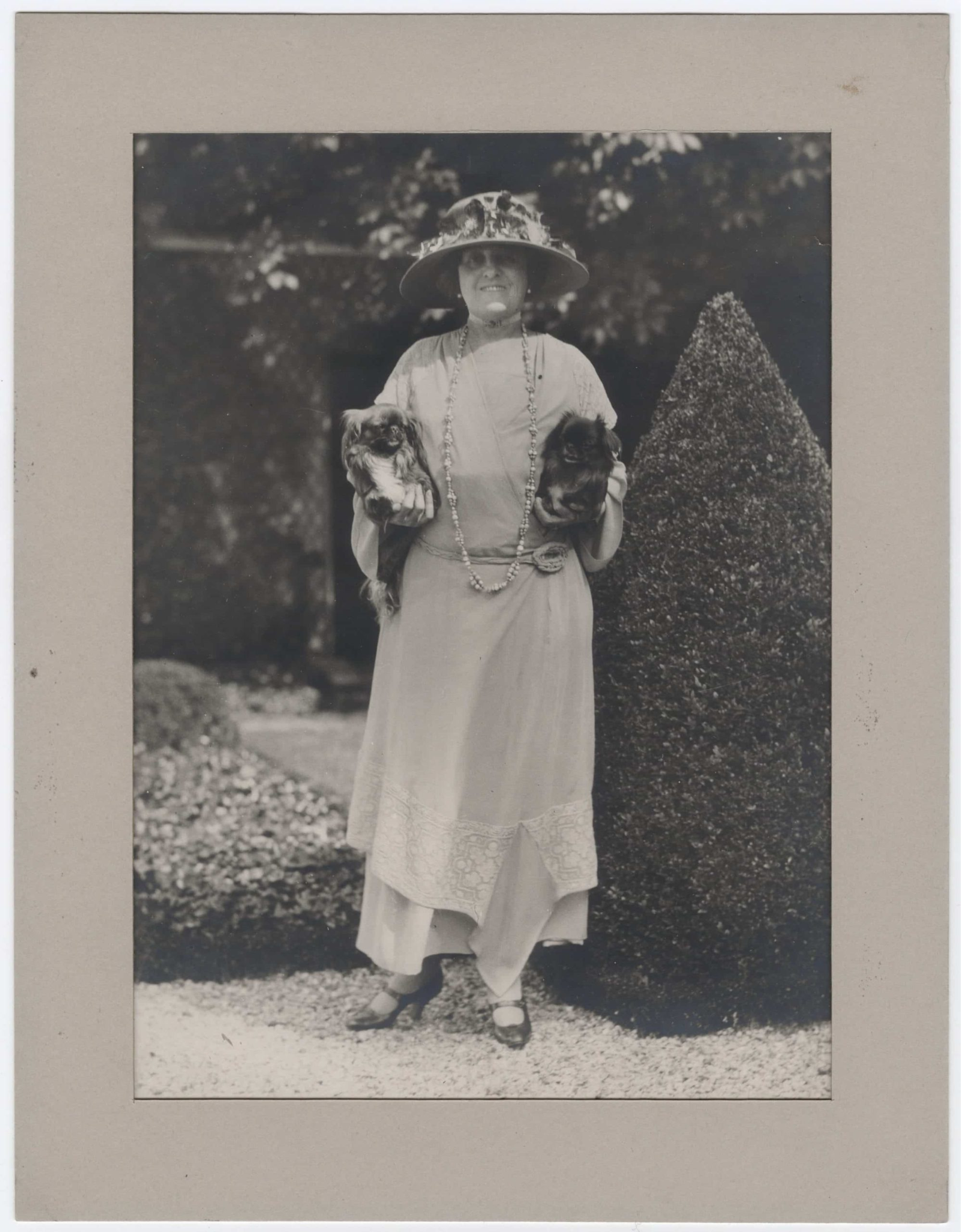
Perhaps at a time when society women were expected to remain polished, gracious, and emotionally self-contained, dogs offered something no drawing room ever could: uncomplicated affection.

It’s a Lapdog’s Life
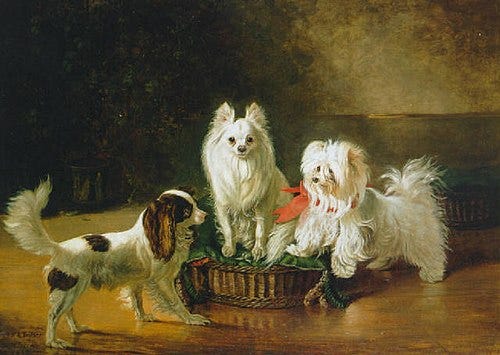
By the 1870s and 1880s, small companion dogs had become firmly woven into the visual language of elite womanhood. Studio portraits, cabinet cards, and illustrated magazines increasingly featured fashionable women seated in velvet chairs with sweet little spaniels curled neatly in their laps, Italian greyhounds sitting to attention, or tiny Pomeranians gazing solemnly at the camera.
But these animals were not chosen at random – breeds such as King Charles spaniels, toy poodles, Maltese dogs, and increasingly fashionable Pomeranians projected refinement, delicacy, and domestic gentility, all qualities Victorian culture eagerly associated with femininity. To appear with a small, impeccably groomed dog suggested its owner had the sort of life in which one had both the time and the resources to care for something ornamental.
(And, of course, the staff).
Because while the image of a society hostess strolling down Fifth Avenue with a tiny dog on her arm may seem charming, somebody still had to handle the feeding, the grooming, the brushing, and, one assumes, the less photogenic realities of dog ownership.
…One doubts Mrs Caroline Astor was spotted out in the garden with a poop scoop at all hours.
