


By the time the Gilded Age arrived, Valentine’s Day was already carrying centuries of expectation. It was a holiday steeped in romance, ritual, and no small amount of social pressure. But while love may have been universal, the freedom to express it most certainly was not.
For the elite of Britain and the United States, Valentine’s Day, like most celebrations of the era, was less about spontaneous passion and more about performance. Every card, flower, and thoughtfully worded verse was weighed against reputation, lineage, and long-term advantage. Meanwhile, for the general population, the same day offered a rare chance to flirt, joke, and even insult with a freedom denied to those at the top of the social ladder.
In the Gilded Age, hearts beat loudly, but hierarchy was deafening.

The Origins of Valentine’s Day
Valentine’s Day is named for Saint Valentine, a shadowy figure shaped as much by legend as by fact. Thought to be a blend of early Christian martyrs executed in 3rd-century Rome, he later acquired a romantic reputation through tales of secret weddings and a farewell letter signed ‘From your Valentine’. While little reliable evidence survives, and his feast day was eventually dropped from the Church calendar, the myth endured.
Yet the association between Valentine’s Day and the romance we know and love (see what I did there?) today harks back to medieval England, and for that we have Chaucer to thank. In the late 1300s, the English writer famously connected St Valentine’s Day with love and the natural world in his 1381 poem, Parlement of Foules, helping to cement the date as a moment for romantic expression.
Fast forward to the 18th century, and Valentine’s Day was well established in Britain as an occasion for handwritten verses, symbolic gifts, and flirtatious exchanges, particularly among the literate urban population. Yet these early Valentines were personal and intimate, exchanged between individuals rather than marketed en masse.
Everything changed in the 19th century. Advances in printing, the availability of cheap paper, and crucially the introduction of the Uniform Penny Post in Britain in 1840 (a new service where letters could be sent across the country for one penny) transformed Valentine’s Day into a commercial and democratic holiday. Suddenly, romance could travel affordably and, if you so wished, anonymously…
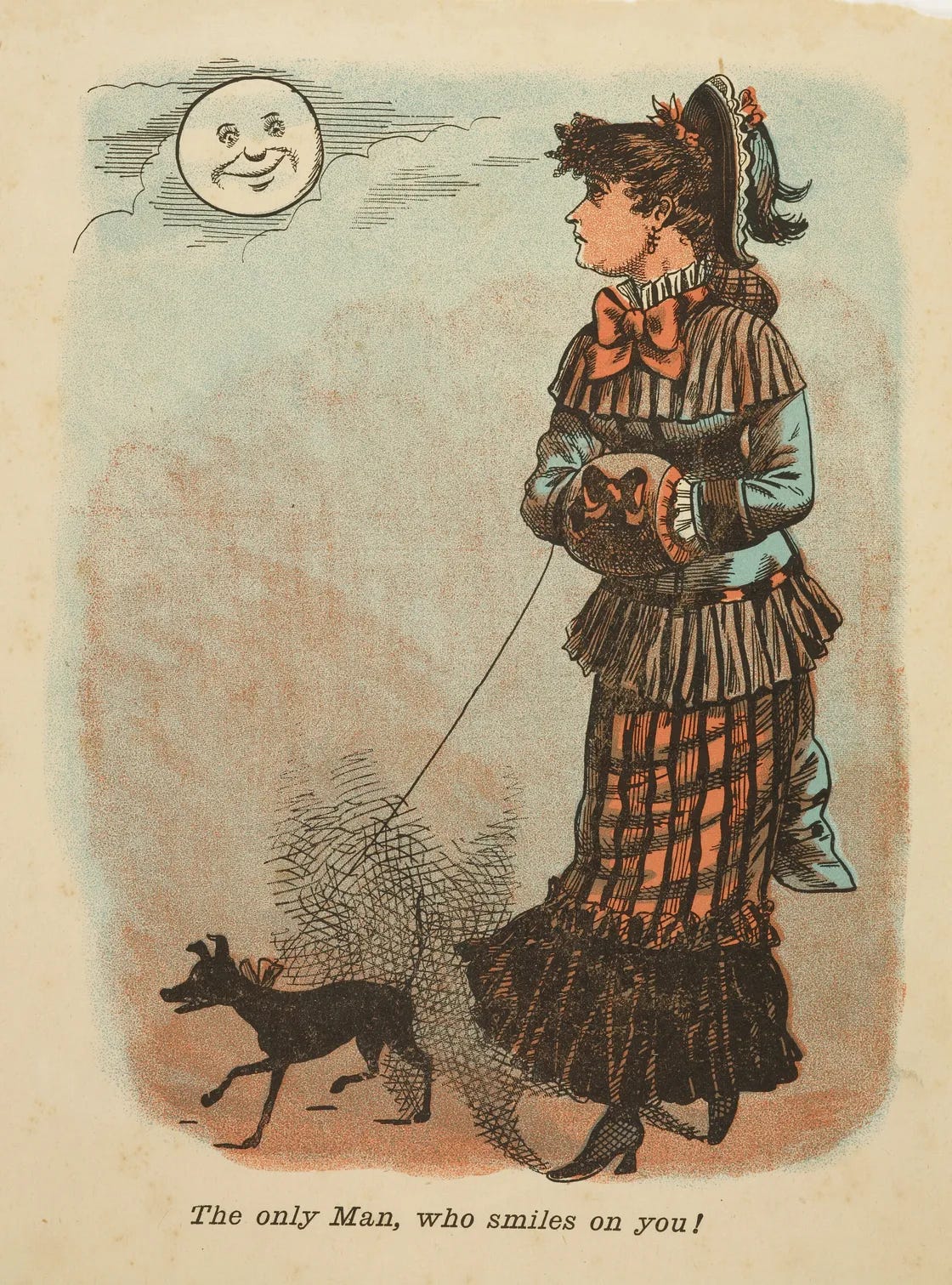
By the time the Gilded Age dawned, Valentine’s Day had become a mass phenomenon. Yet how it was celebrated depended entirely on where one sat within the social order.

Romance with Rules: Love Among the Elite
For upper-class families, the gaiety of Valentine’s Day did not suspend the rules of polite society. If anything, it emphasised them.
Romantic gestures were expected to be tasteful, restrained, and appropriate to the stage of a relationship. Unsurprisingly, flowers were a popular choice, but they were never neutral. The Victorian language of flowers, or floriography, assigned specific meanings to blooms, turning bouquets into coded messages that could be eagerly analysed by recipients and their wider social circles. You can read more about this in my Decoding the Language of Gilded Age Social Signals blog.
