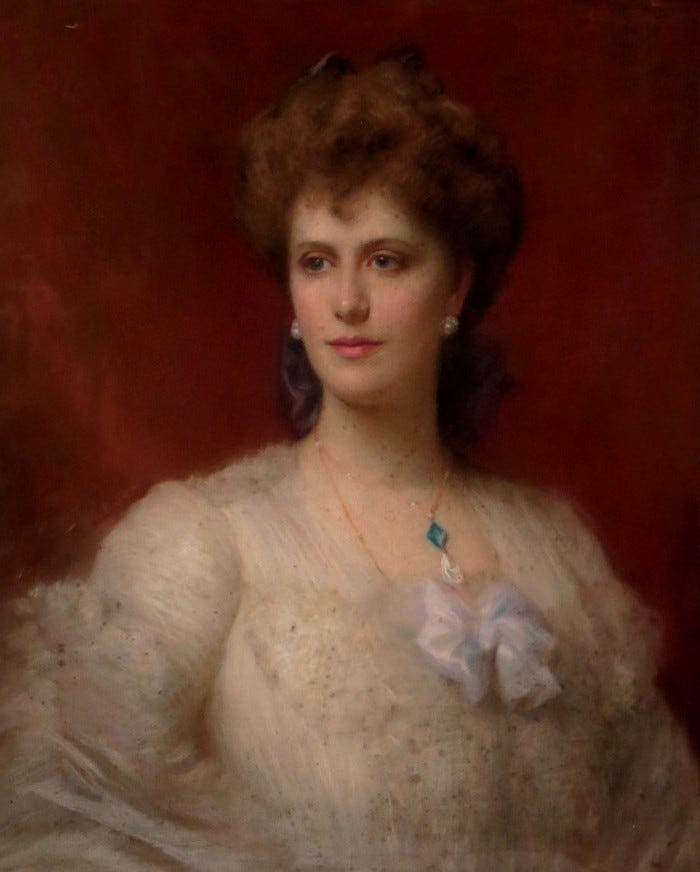
Prize or Prison? Mistresses in the Gilded Age
The original situationships of high society.

In honour of Bridgerton Season 4 gracing our screens last month, I’ll be publishing Regency-inspired content across all our channels. This week, we’re discussing having your cake and eating it, too…
In Season 4 of Bridgerton, the dashing Benedict makes an offer that he believes is generous. He asks the maid and illegitimate daughter of an earl, Sophie, to be his mistress. Marriage, or even a relationship, in his world? Impossible. Their backgrounds are too different, and high society simply wouldn’t allow it. So he presents what he sees as the next best thing: comfort, protection, and financial security. Surprisingly (at least to him), Sophie refuses. She understands what the offer truly represents; to be a mistress is to accept a life without legitimacy.
Despite the Regency period coming almost a century before, the logic behind Benedict’s proposed dynamic would have been entirely recognisable to the men and women of the Gilded Age. But what did the arrangement mean for those involved, and who really benefitted from the exchange?

How Common Were Mistresses?
Extramarital relationships among elite men were not rare in the late nineteenth century. They were, however, expected to be discreet.
In Britain, divorce remained difficult and socially damaging well into the late Victorian period. The Matrimonial Causes Act of 1857 had made civil divorce possible, yet didn’t level the playing field between the sexes. A husband could obtain a divorce on the grounds of adultery alone; a wife, meanwhile, had to prove adultery plus additional offences such as cruelty, sexual abuse, or desertion.
In such a context, it was often easier for a wealthy married man to maintain a mistress than to seek a divorce that could potentially affect property settlements, political prospects, or, most damaging of all, their reputations.
One of the most famous examples is Edward VII, long before he ascended the throne. As Prince of Wales, he conducted numerous extramarital relationships during his marriage to Alexandra of Denmark. Among his best-known companions was Alice Keppel (eagle-eyed readers may remember her from last month’s article, Gilded Age Deep Dive: The Era’s Most Scandalous Forbidden Love Stories), with whom he maintained a relationship from the late 1890s until his death in 1910.
Their liaison was widely known within aristocratic circles, with even Alexandra herself believed to have tolerated it, provided that discretion was observed, and public duties were maintained. The key was the performance. A man may have been permitted to indulge (albeit with resignation from his wife), under the proviso that he wouldn’t embarrass her publicly…